A Broadway Landmark With a Story Worth Knowing
The Gershwin Theatre stands at 222 West 51st Street in Midtown Manhattan, and by any measure, it is one of the most impressive performance spaces on Broadway. Named after the legendary composer George Gershwin, the theater opened in 1972 as part of the Uris Building complex and was later renamed in 1983 to honor his lasting influence on American music and theater. With a seating capacity of around 1,933 seats, it ranks as the largest legitimate theater on Broadway, a distinction that shapes everything from the scale of its productions to the sheer spectacle audiences come to expect.
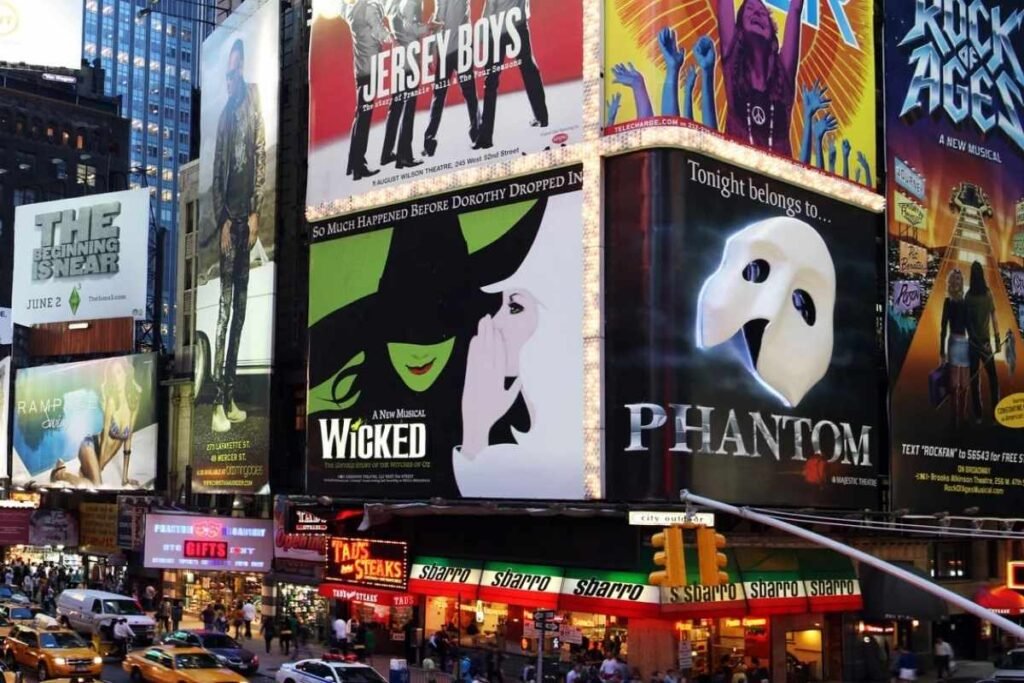
The venue is most famously associated with Wicked, the blockbuster musical that played there for over two decades before its Broadway run concluded. The show became so identified with the Gershwin that many theatergoers still picture its green-lit facade when they think of the address. The theater has also hosted major productions including Pippin, Sweeney Todd, and Into the Woods, cementing its reputation as a home for ambitious, large-scale musicals.
One detail worth knowing before you book: the Gershwin is a tall, wide house. Productions mounted here are specifically designed to fill that space, which means the stagecraft, set design, and sound systems tend to be engineered on a grand scale. If you are choosing between venues for a first Broadway experience, the sheer size and energy of the Gershwin auditorium makes it genuinely memorable.
Practical Tips for Visiting The Gershwin Theatre in 2026
Getting to the theater is straightforward. The closest subway stops are 50th Street on the 1 train, and 49th Street on the N, R, and W lines. Both put you within a two-minute walk of the main entrance. If you are driving, parking garages are available on 51st and 52nd Streets, but rates in Midtown are steep, especially on weekend evenings, so public transit is the smarter call.
Arrive at least 30 minutes before curtain. The lobby, while spacious by Broadway standards, fills up quickly on busy nights, and the coat check lines can run long in winter. The bar areas open well before the show, and grabbing a drink early saves you the rush during intermission.
On seating: the orchestra section offers a direct sightline to the stage, and rows closer to the center aisle give you the best of both sight and sound. The mezzanine at the Gershwin is a legitimate alternative, offering an elevated perspective that actually works well for productions with large ensemble choreography and sweeping set pieces. The front rows of the mezzanine sit at a comfortable distance without feeling remote. Avoid the rear of the upper balcony if intimate detail matters to you.
If you are planning a full Broadway week, the Gershwin pairs well with other Midtown productions. Shows like Hamilton at the Richard Rodgers Theatre and The Lion King at the Minskoff are both within walking distance, making it easy to build a multi-show itinerary without hopping across the city. Most restaurants along 8th Avenue and the side streets of the Theater District are well used to pre-show diners and can turn tables efficiently before an 8 PM curtain.
The Gershwin also has accessible seating and companion seats available through the Ticketmaster accessibility line, and the venue is fully ADA compliant with elevator access to all levels. It is advisable to request accessible accommodations at the time of booking rather than on arrival, particularly for popular shows during peak tourist season in spring and summer 2026.